

Preparation and screeding
The substrate is checked and, where needed, screeded to get the falls right before any membrane goes on.
 Back to Services
/Trade services
Membrane waterproofing for bathrooms, showers and laundries, prepared and applied before tiling as part of a standalone job or wider renovation.
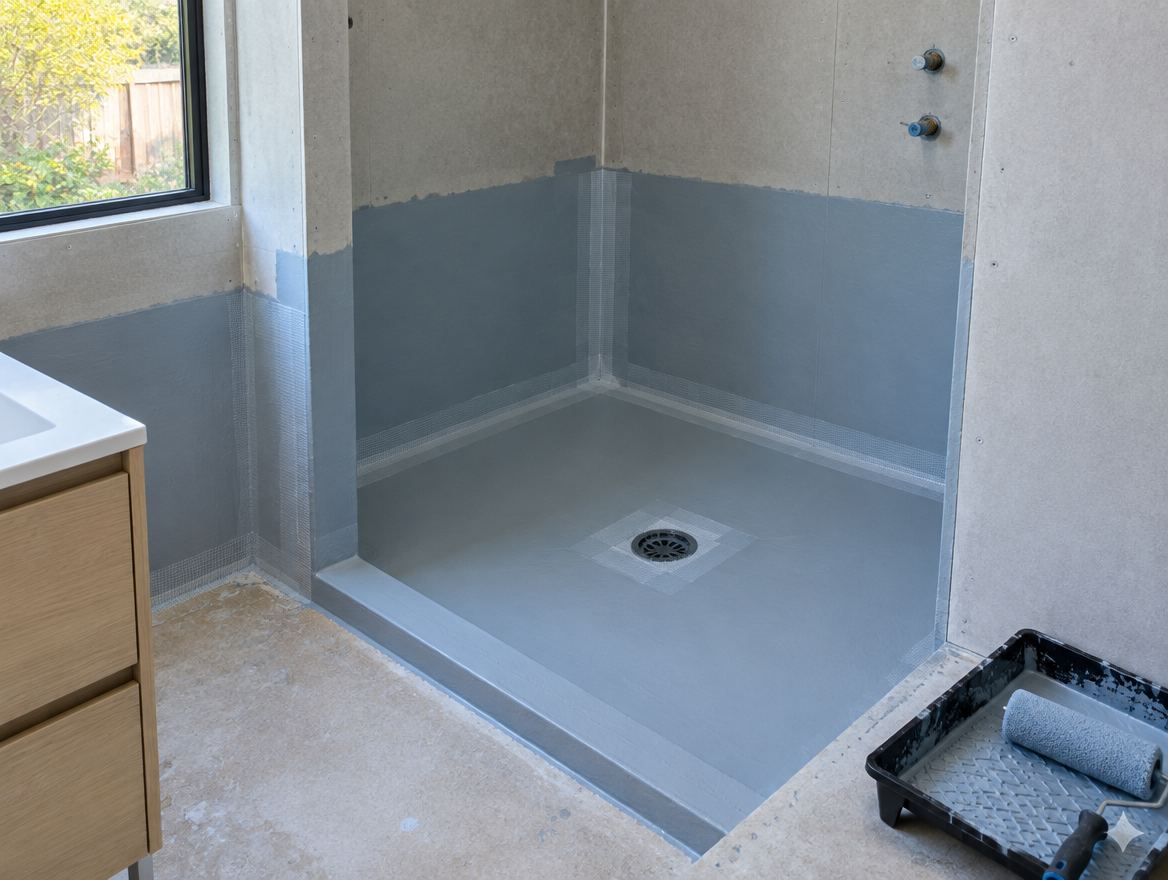
Bathrooms and laundries are wet almost every day. Once the tiles are down, waterproofing is the part of the job you can't see and won't think about again — an important part of protecting the room from water penetration once the tiling is finished.
The membrane forms a water-resistant barrier beneath the finished tile surface, helping prevent water from reaching the underlying structure. It sits between surface preparation and tiling: the substrate is prepared and screeded where needed first, then the waterproofing membrane goes on, then tiling happens over the top once it's cured.
/How it works
Waterproofing works best as one step in a connected sequence, not a job done in isolation.
The substrate is checked and, where needed, screeded to get the falls right before any membrane goes on.
Membrane is applied to the relevant walls and floor areas, covering the shower recess, floor, and any junctions and penetrations.
Once the waterproofing has cured, tiling goes ahead over the protected surface.
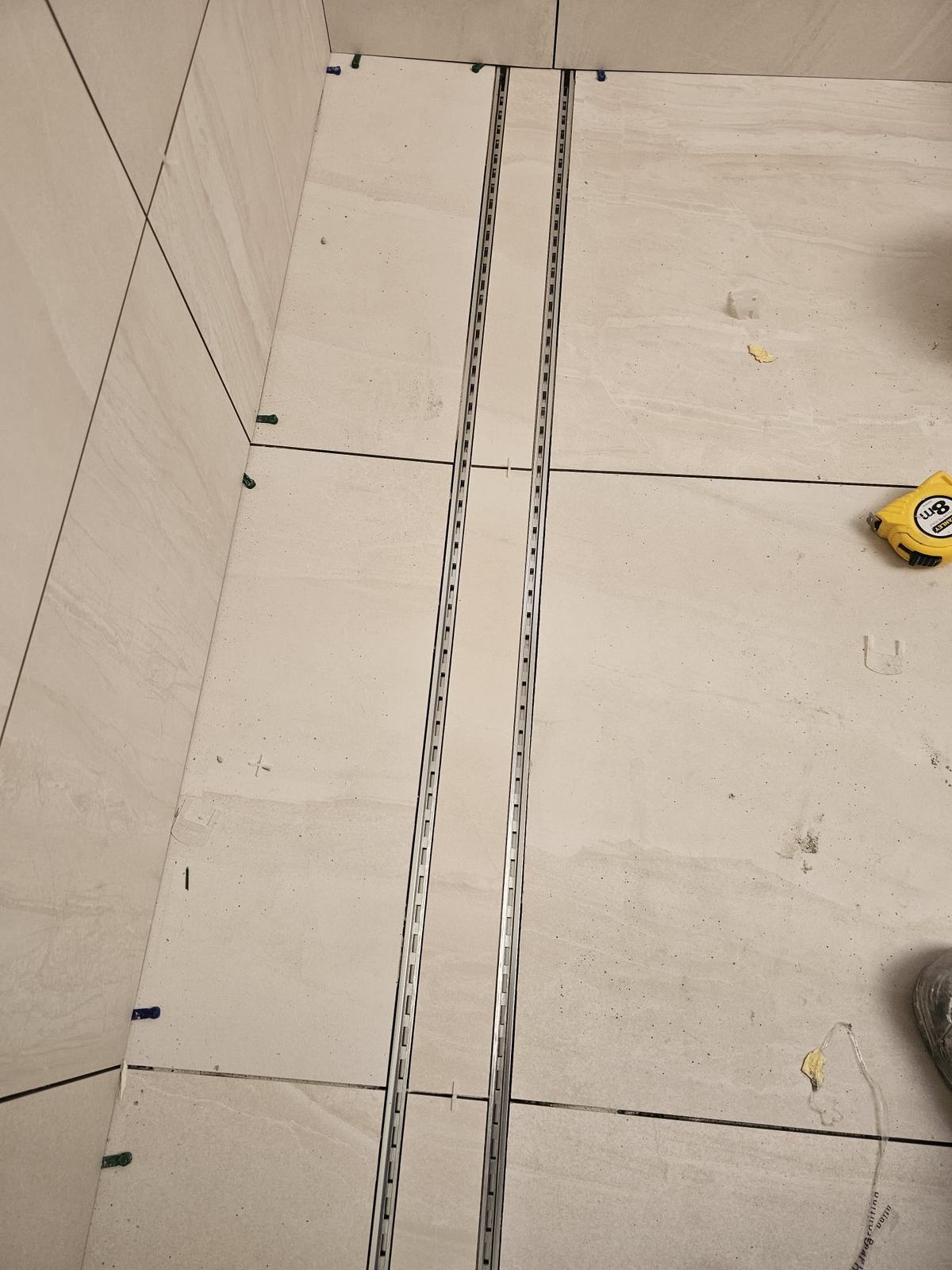
Shower recesses, bathroom floors and laundry floors are where waterproofing matters most — anywhere water sits or runs across the floor regularly. Corners, wall-floor junctions, penetrations and floor wastes all need careful detailing as part of the waterproofing system.
Getting this step right is what keeps water out of the surrounding structure over the long run — it's not something worth cutting corners on to save a day.
Waterproofing can be booked on its own — re-waterproofing a shower recess before re-tiling, for example — or as part of a full bathroom or laundry renovation where it's one stage among several. Either way, it needs to happen before tiling, not after.
Waterproofing in wet areas needs to be installed in accordance with the applicable requirements for the job. The relevant areas are prepared, waterproofed and allowed to cure before tiling begins.

Top Tier Tiling Group provides waterproofing for bathroom and laundry projects across Melbourne, whether it's a standalone wet-area job or part of a larger renovation.
Get in touch with Top Tier Tiling Group to talk through your job and request a quote.
/Questions & answers
Wet areas such as bathrooms and laundries generally need waterproofing applied to the relevant surfaces before tiling begins.
Yes, waterproofing is typically included as part of a full bathroom renovation, alongside screeding and tiling.
It depends on the product and how many coats are applied — tiling doesn't start until the membrane has cured properly, not on a fixed schedule regardless of conditions.